
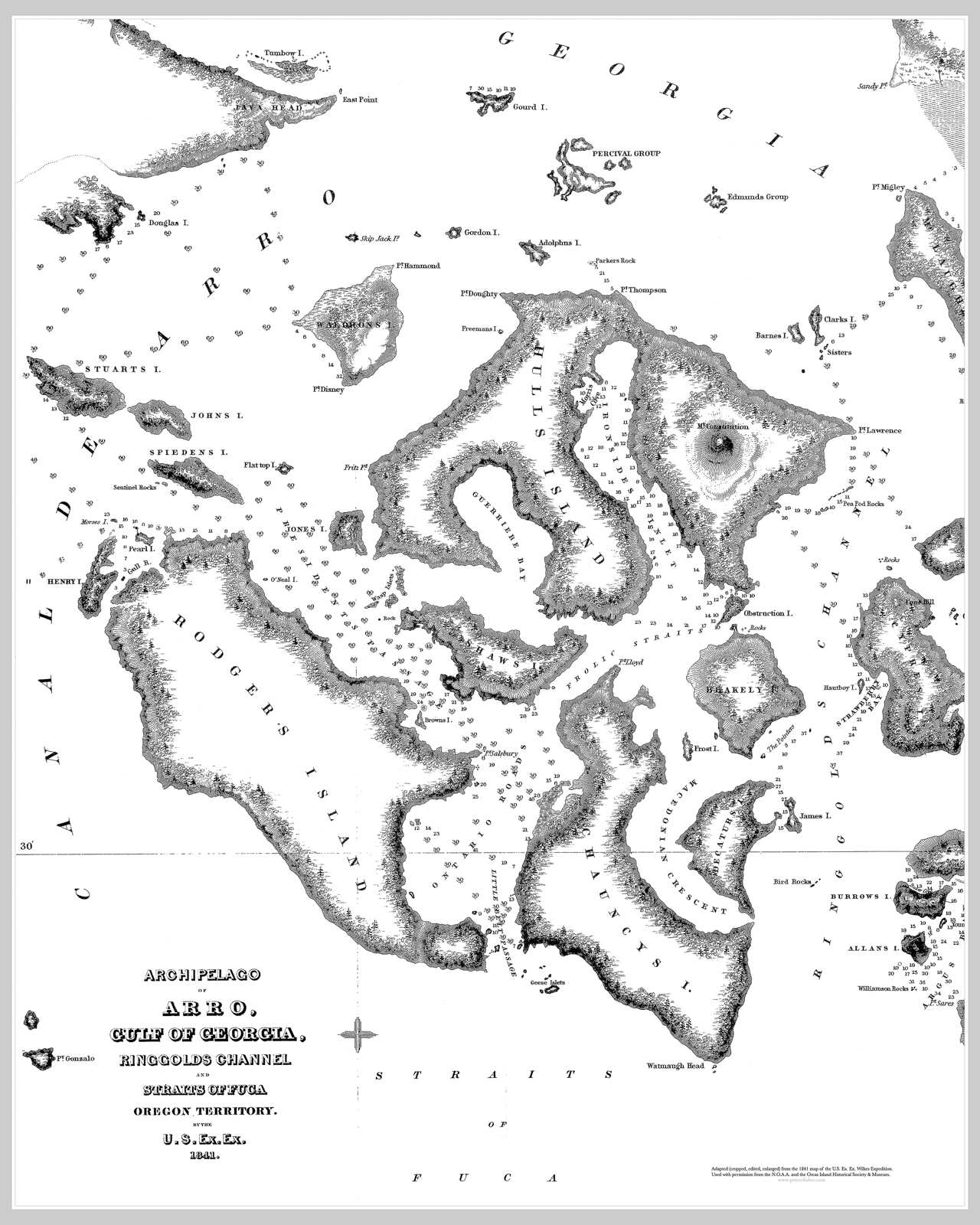
The last great, worldwide, sailing expedition came to the San Juan Islands to “extend the empire of commerce and science” by mapping and investigating little known regions of the Pacific. This map depicts two islands north of Orcas Island, Gordon Island and Adolphus Island, that don’t actually exist. They were thought to have been included by disgruntled members of the expedition aiming to discrediting Wilkes.
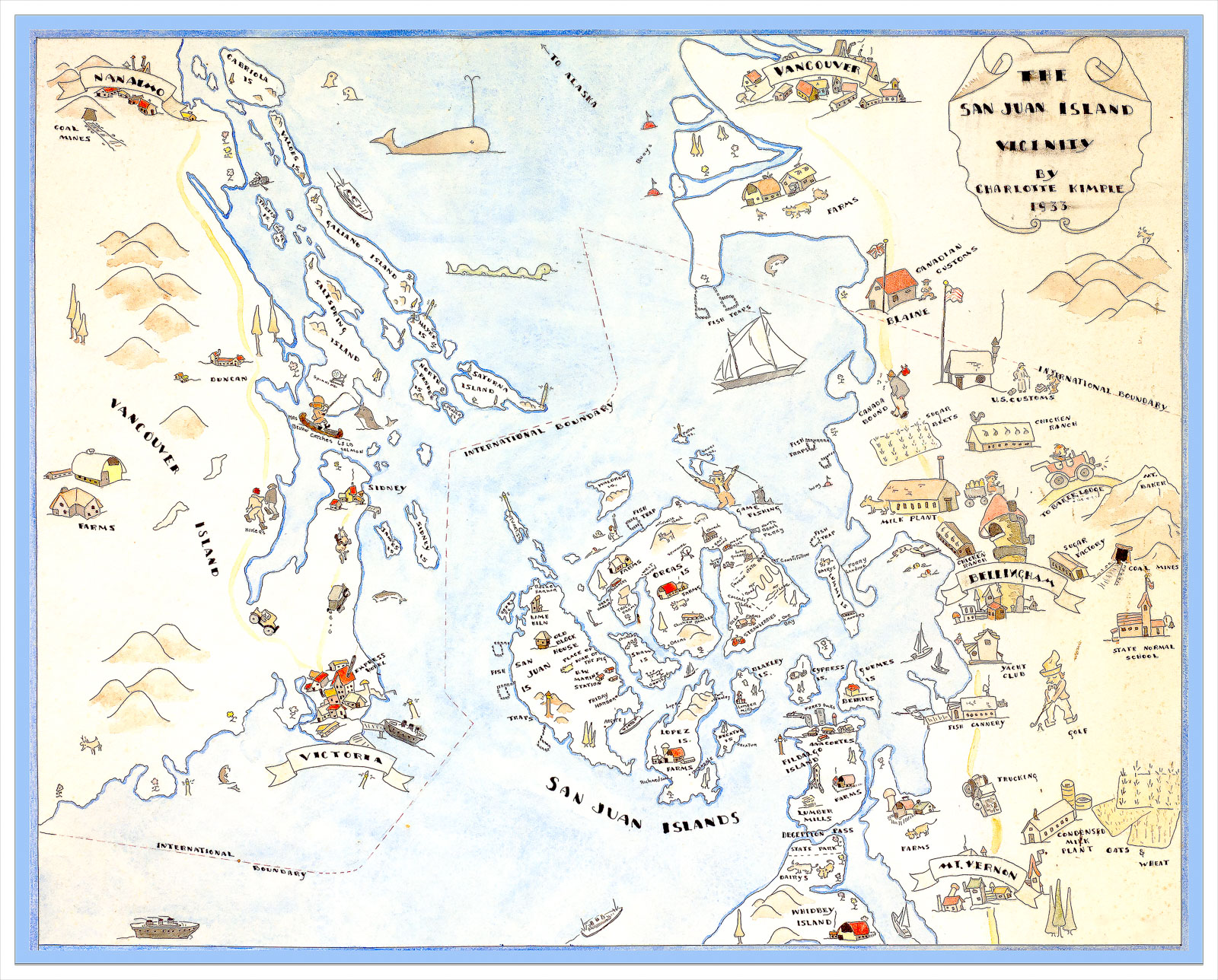
This graphic map of the San Juan Islands and their surroundings was originally a painting. It beautifully and whimsically highlights local attractions such as landmarks, strawberry farms, and fish traps.
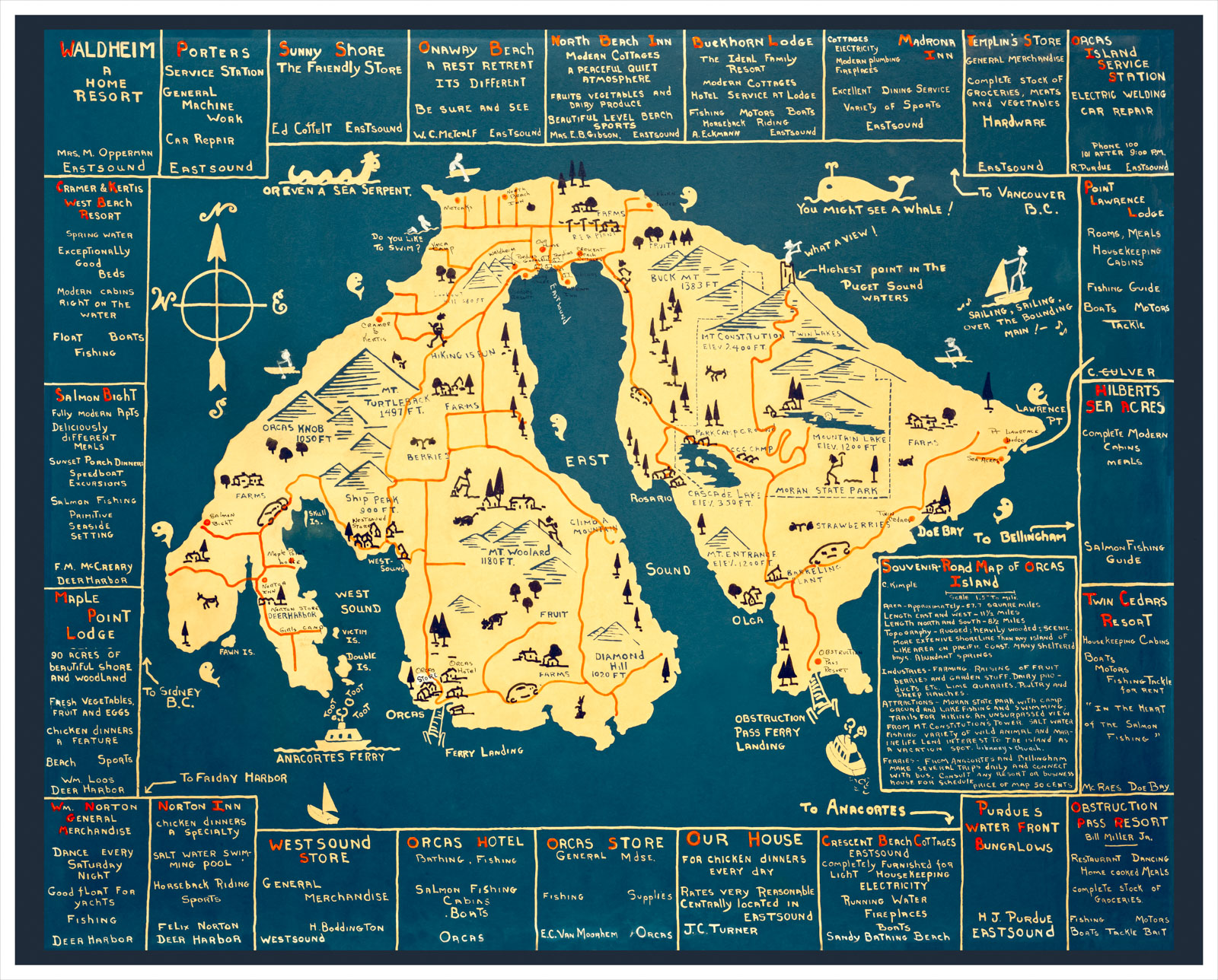
This map from the mid 1930s highlights the businesses and attractions that existed on Orcas Island at that time, making it interesting from a historical perspective, while the fun, white figures and illustrations make it unique and charming overall.

This, the first geological map of the San Juan Islands, was done by Roy D. McLellan in 1927 for the University of Washington.
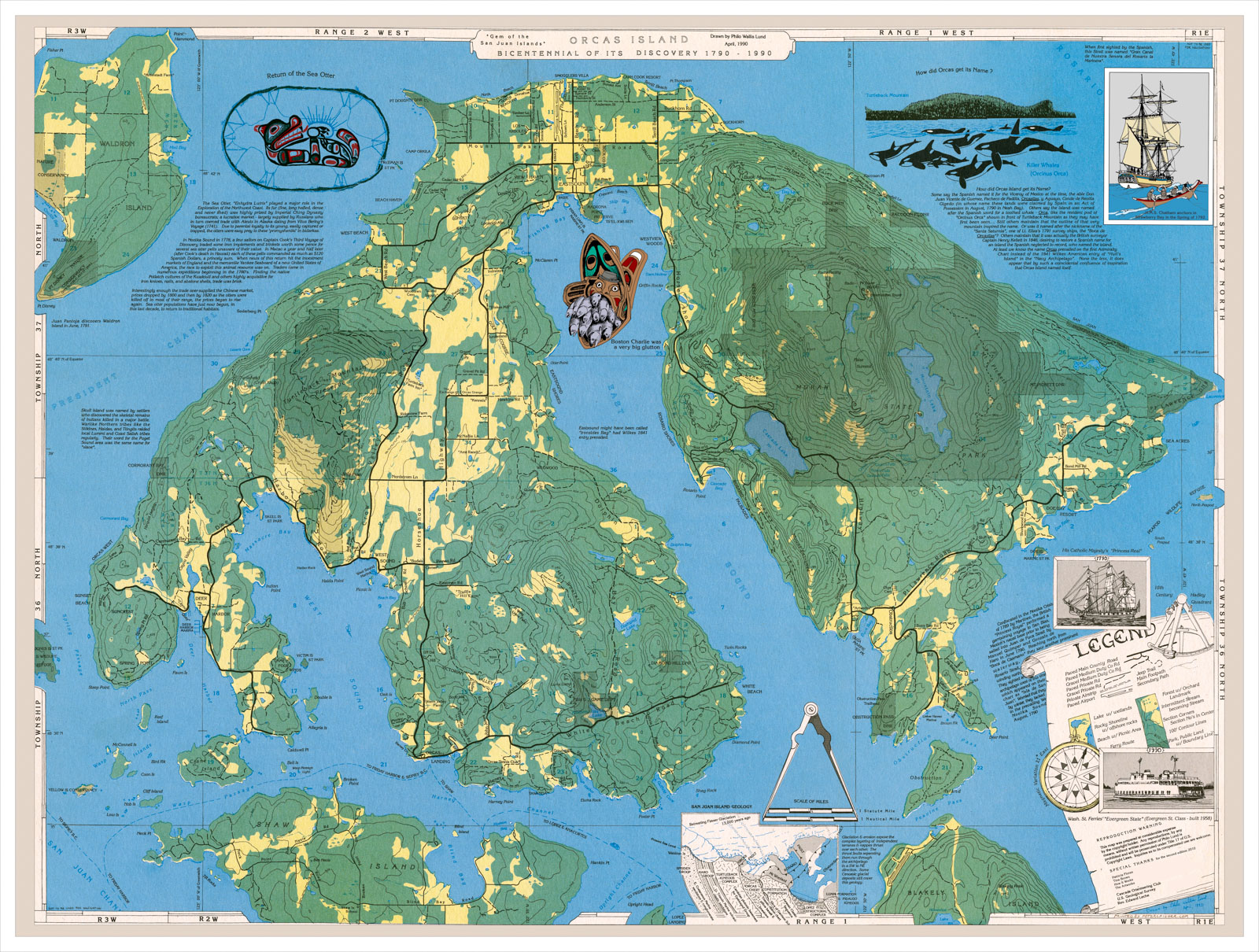
This artistic map, made for Orcas Island’s bicentennial, features an accurate road network last updated 2010, in addition to local legends, and illustrated art.

This U.S. Geological Survey of Orcas Island from 2017 features the finest topography lines in this collection. Hiking trails for Mt. Constitution and Turtleback Mountain have been added in.

This map depicts the Pacific Northwest before Washington and Oregon became states. The area was then known as the Oregon Territory or Oregon Country and encompassed all of present-day Washington, Oregon, and Idaho, as well as parts of Montana, Wyoming, and British Columbia.

A map-and-photo comparison of the development of the Eastsound Village core
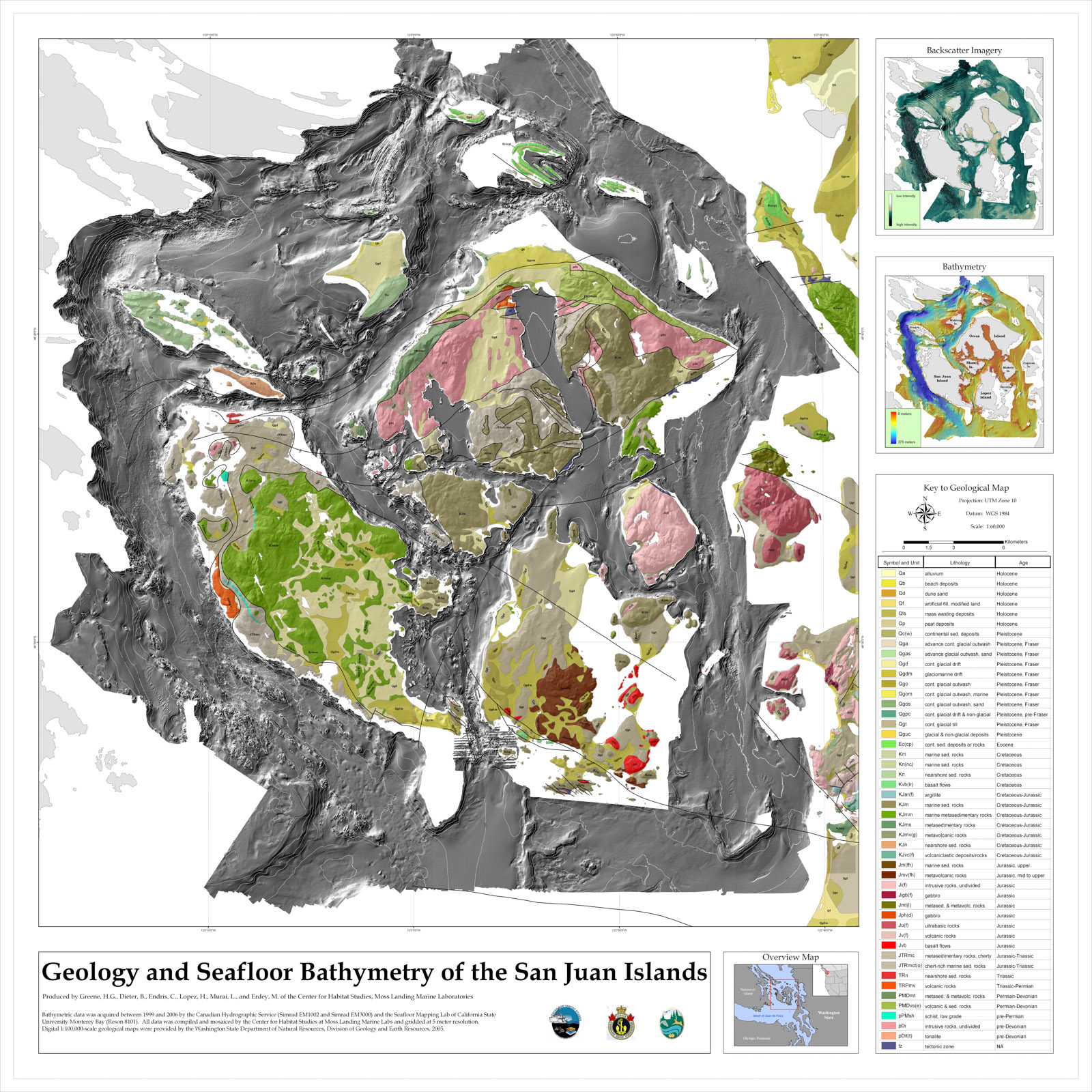
This map combines the most current geology and seafloor bathymetry of the San Juan Islands.
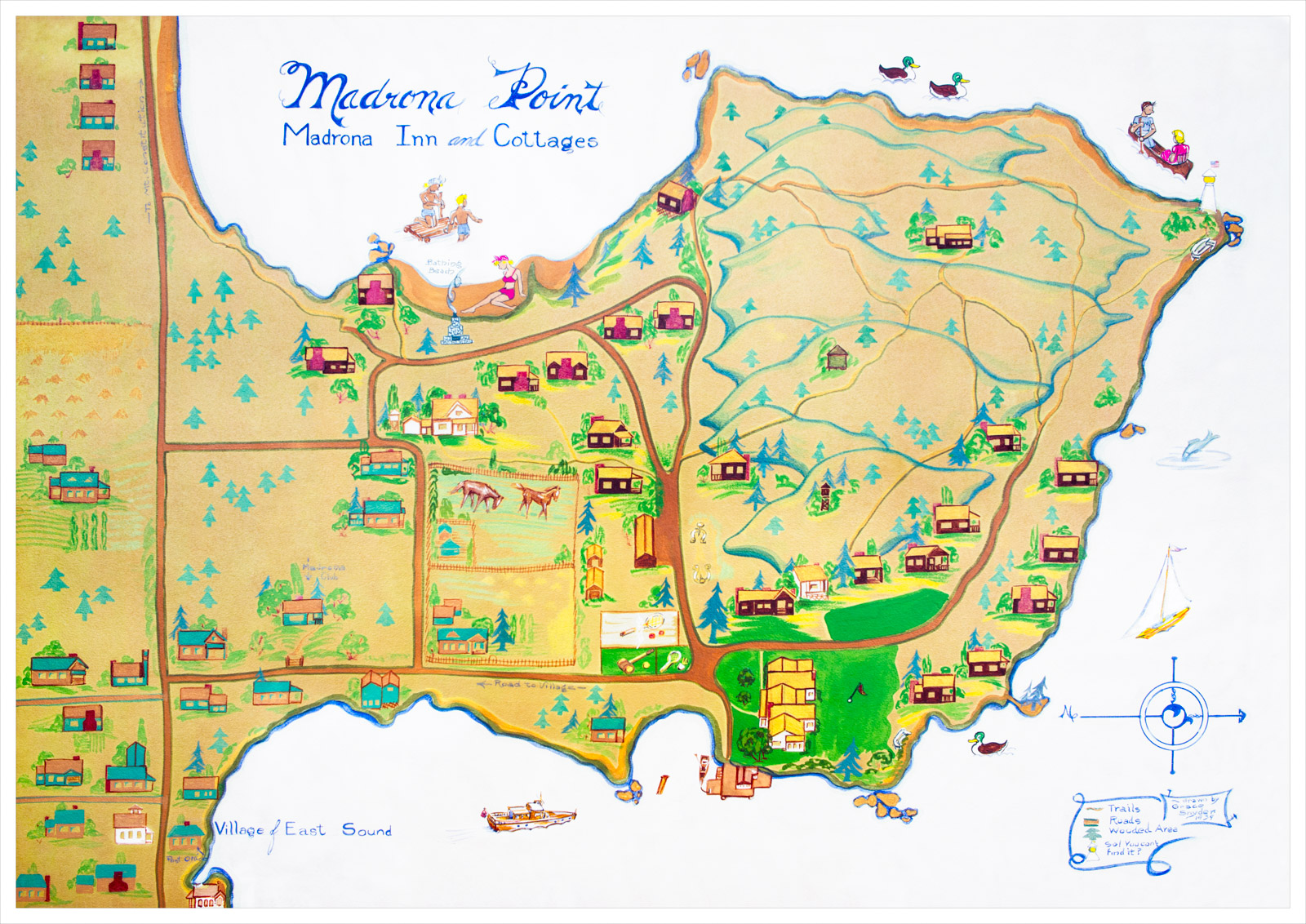
This highly inaccurate map shows the inn and cottages that used to sit on Madrona Point.
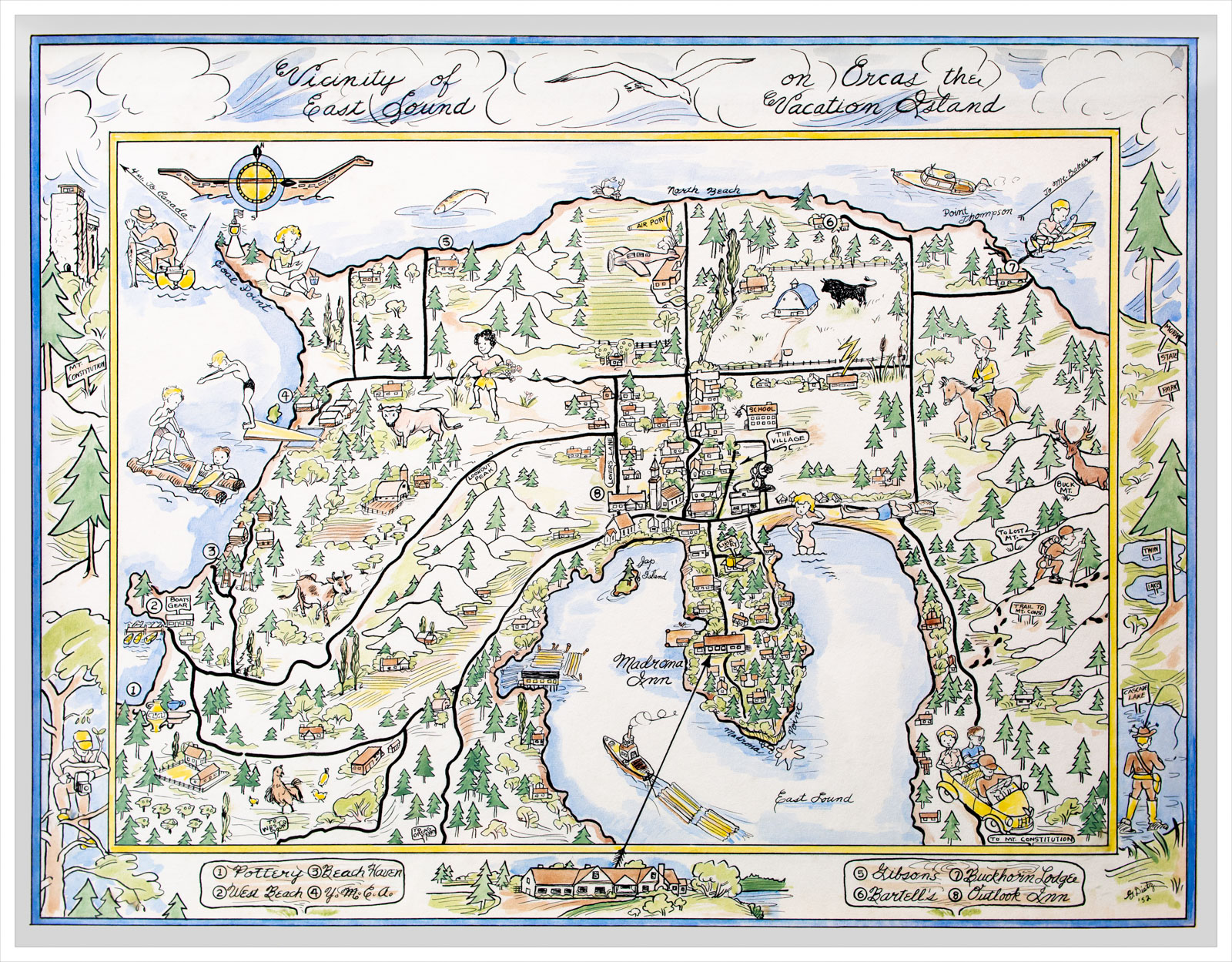
This highly-detailed painting shows eight popular attractions within the vicinity of Eastsound as they would have appeared in the early 1950s. Some have passed into history. Some still remain today.